Emotional Mapping
The Body-Based Emotion Chart
Your body remembers things your mind has learned to forget. This tool helps you reconnect with that intelligence by observing where feelings land in your body, rather than treating emotions as abstract ideas.
About This Tool
Reconnect with the body's intelligence.

About This Tool
Most of us try to "think" our way through emotions, but the truth is: the body speaks first. This tool helps you:
Practice Interoception
Enhance your brain's ability to sense internal states like tightness, breath, and temperature.
Complete Emotional Cycles
Naming sensations helps the brain complete emotional cycles rather than storing them as tension.
Listen Without Judgment
Learn to listen to the body the way you listen to a friend — gently and without rushing.
This isn't about fixing emotions. It's about finally feeling them so they can move, release, and reveal what you truly need.
Why This Tool Works
People with stronger interoceptive awareness are better at emotional regulation, intuition, decision-making, and recovering from stress.
Every emotion — whether joy, fear, shame, excitement, or grief — leaves a physical trace. Instead of treating emotions as abstract ideas, this tool helps you see them as sensations, patterns, and rhythms.
Over time, these sensations form a personal atlas of how you experience life from the inside out. By pausing to feel, your nervous system begins to soften, regulate, and trust again.
How To Use It
Sit for a moment and notice what you're feeling. You don't need to force anything. Just check in. Your body will always tell you something if you give it a chance.
When an emotion arises, mark exactly where you feel it. Use symbols to represent sensations such as tightness, pressure, heaviness, warmth, or fluttering.
Label what the sensation feels like. It might be a word ("anxious"), a phrase ("something's stuck here"), or even a simple sound. Whatever feels true in that moment.
Add a short note. Write down what triggered the emotion or what was happening around you. This builds emotional context, not just awareness.
Review your map at the end of the week. Look for patterns like recurring tension, specific triggers, or the body warning you before the mind catches up.
Get the Full Emotional Mapping Worksheet
Get the complete Emotional Mapping guide and start building your body-based emotional awareness.
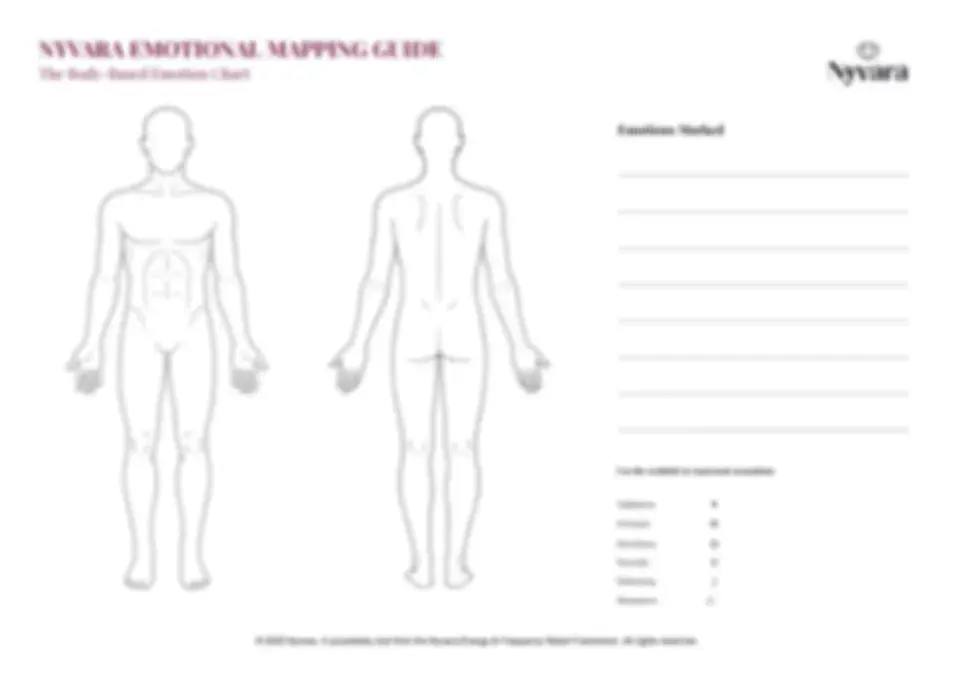
Preview
PDF Format